The final number on your invoice depends on device type, monthly print volume, color capability, contract length, and what's bundled into the deal. Two businesses with identical printers can end up with very different bills once service, toner, and lease terms are factored in.
This guide breaks down realistic 2026 pricing ranges, the factors that push costs up or down, the fees that catch businesses off guard, and how to budget accurately. Metro Atlanta businesses can also get their specific print environment evaluated locally — Southern Office Machines has been matching Marietta and Atlanta-area companies with the right equipment since 1985.
Key Takeaways
- Monthly lease rates typically run from the low $100s for entry-level devices to $1,500+ for production-grade machines
- Print volume, color capability, contract length, and bundled services are the biggest price drivers
- Leasing offers predictable costs and easy upgrades, while buying suits capital-rich, long-term equipment owners
- Overage charges, escalator clauses, and auto-renewal terms can inflate your "real" monthly cost beyond the quoted rate
How Much Does It Cost to Lease a Copier in 2026? (Pricing Overview)
There's no fixed price sheet for copier leasing. Rates depend on the equipment tier, but based on current market data, most businesses land somewhere in the low $100s to $1,500+ per month range once service and supplies are factored in.
Three mistakes tend to blow up a copier budget before the lease is even signed:
- Underestimating print volume, which leads to constant overage charges
- Picking the wrong device tier: either overpaying for capacity you don't need or under-buying and bottlenecking your team
- Forgetting to fold service and maintenance into the "true" monthly cost, then getting surprised by the full bill
Entry-Level / Desktop Copiers
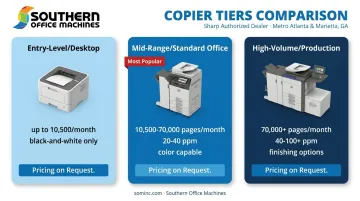
These machines handle basic black-and-white printing and copying with modest monthly page capacity, commonly designed for volumes up to roughly 10,500 pages a month, the "light-use" threshold defined in Georgia's statewide MFP contract guidance.
It works well for small offices, single departments, or businesses with occasional, low-volume printing needs. Monthly lease payments here sit at the lower end of the market.
Mid-Range / Standard Office Copiers
Mid-range machines add color multifunction (MFP) capability, print speeds around 20-40 pages per minute (ppm), plus scanning and networking features. Georgia's contract guidance classifies this "moderate-use" band as 10,500 to 70,000 pages a month.
This is the sweet spot for busy small-to-mid-sized offices that need regular color output alongside copy, scan, and fax functions in one unit. Monthly rates climb here as color capability and speed increase.
High-Volume / Production Copiers
Production copiers run at 40+ ppm, sometimes well above 100 ppm, and add finishing options like stapling, booklet-making, and heavy-duty paper handling. Georgia defines high-use/production as anything over 70,000 pages a month.
Real-world pricing evidence: A 2025 Texas state contract lists a 105 ppm production copier at $779.98 per month on a 24-month term, per the Texas Department of Information Resources pricing index. This is one documented example of what production-tier leasing looks like in practice.
This tier suits large offices, print-heavy departments, or centralized print rooms.
Key Factors That Affect Copier Lease Pricing
Several factors shape lease pricing, including technical specs, your monthly print volume, and how the contract itself is structured.
Device Type, Speed & Features
Print speed, color capability, and finishing features directly raise or lower the monthly rate. A 20 ppm black-and-white desktop unit and a 60 ppm color MFP with a booklet finisher aren't competing for the same budget. Faster speeds and richer feature sets simply cost more to lease every month.
Print Volume & Duty Cycle
Your expected monthly page volume determines which device tier makes sense. Go too small, and you'll pay overage charges every month once you exceed your allotted pages. Go too big, and you're paying for capacity you'll never use.
Lease Term & Lease Type
Shorter lease terms mean higher monthly payments but more flexibility to upgrade sooner. Longer terms lower the monthly payment but raise the total cost over the life of the contract. You'll also encounter two structures:
- FMV (Fair Market Value) leases: Lower payments, with the option to return, renew, or buy the equipment at fair market value at term's end
- $1 buyout leases: Function more like a loan, with generally higher monthly payments, structured for outright ownership
Service, Maintenance & Supplies Inclusion
Bundling service, parts, and toner into your lease typically adds a percentage to the base rate. In exchange, it protects you from surprise repair bills, a trade many businesses find worthwhile for budget predictability.
New vs. Refurbished Equipment
Certified refurbished machines can cost meaningfully less than new units while still meeting most business needs. Southern Office Machines offers both new and refurbished Sharp equipment, so businesses can match the right product to the right price without overspending on capacity they don't need.
Copier Lease Cost Breakdown: What's Included Beyond the Monthly Payment
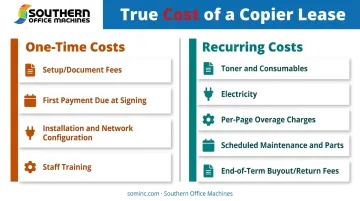
The advertised monthly rate rarely tells the whole story. The true cost of a copier lease includes several one-time and recurring components layered on top.
One-time costs:
- Initial setup: Document and administrative fees, plus your first payment due at signing
- Installation and training: Delivery, network configuration, and staff training, which vendors either bundle into the base rate or bill separately
Recurring costs:
- Operating costs: Toner, consumables, electricity, and per-page overage charges once you exceed your included volume
- Maintenance and end-of-term costs: Scheduled servicing and parts (if not already covered), plus buyout, return, or upgrade costs when the lease matures
Government contracts show how much this mix can vary: some RFPs bundle delivery, installation, labor, parts, toner, drum, developer, and staples into one quoted price, while others itemize each line separately. Always confirm which model you're getting before signing. Southern Office Machines calculates total cost of ownership on every quote, so you see the full picture upfront.
Leasing vs. Buying a Copier: Which Makes More Financial Sense
This is one of the biggest cost decisions businesses face when acquiring a copier, and the right answer depends on your cash flow and how long you plan to keep the equipment.
Consider these four factors before deciding:
- Upfront cost and cash flow: Leasing preserves capital with a manageable monthly payment, while buying means paying the full price upfront (often several thousand dollars for a mid-range or production-grade unit).
- Technology refresh: Leasing lets you upgrade every few years as your needs change, while buying means running the same machine until it's fully depreciated.
- Tax treatment: Lease payments under a true lease are often deductible as an operating expense, according to IRS guidance on income and expenses. Purchases, by contrast, are recovered through depreciation over time.
- When each option wins: Leasing fits most businesses that want predictable costs and flexibility. Buying suits companies with strong capital reserves planning to keep equipment for 7+ years.
IRS note: A conditional sales contract may be treated as an outright purchase for tax purposes, regardless of what the agreement is called. Confirm the details with your accountant before signing.
Hidden Fees to Watch For & How to Estimate Your Real Budget
Many businesses focus only on the advertised monthly rate, then get surprised by costs layered on top later.
Common Hidden Costs in Copier Leases
- Overage charges for exceeding your included page allowance, often $0.01-$0.03 per extra page
- Escalator clauses that raise your payment 3-5% every year of the term
- Auto-renewal ("evergreen") clauses that lock you into another term if you don't cancel in time: many contracts require written notice 60-90 days before expiration, or you risk a full 12-month renewal
- Early termination penalties and end-of-lease pickup or administrative fees
Together, these charges can add hundreds of dollars to your monthly cost without appearing on the initial quote.
Estimating the Right Budget for Your Business
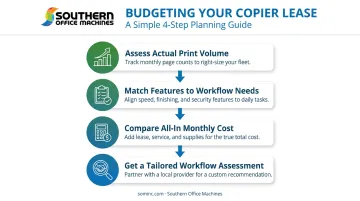
Getting an accurate number means looking past the sticker price:
- Assess your actual monthly print/copy volume before selecting a device tier, since guessing usually leads to overage fees
- Match features to real workflow needs instead of over-specifying and overpaying for capacity you won't use
- Compare the all-in monthly cost, meaning lease plus service plus supplies, not just the bare lease rate
- Get a tailored workflow assessment from a local provider who can evaluate your actual processes
Southern Office Machines' team, guided by specialists like Sheldon Michaels, evaluates a business's real workflow to recommend the smallest, sturdiest machine that gets the job done. This approach comes backed by a lowest price guarantee for the Atlanta area.
Frequently Asked Questions
While copier lease costs vary widely, understanding these factors leads to smarter, more accurate budgeting decisions.
What are typical copier leasing rates?
Rates generally range from the low $100s a month for entry-level desktop units to $1,500 or more for high-volume production machines. Your exact rate depends on print volume, color capability, and features.
What is the average cost to lease a copier per month?
Within that range, most small and mid-sized businesses land in the low-to-mid hundreds monthly for standard office MFPs. Volume, color usage, contract length, and bundled services push that number up or down.
Is it cheaper to lease or buy a copier?
Leasing preserves cash flow and works well for most businesses that want predictable monthly costs. Buying can be cheaper long-term for companies with capital reserves that plan to keep equipment for 7+ years.
What is a typical copier lease term?
Lease terms commonly run 36 to 60 months, though shorter and longer options exist depending on the provider and equipment type. Shorter terms cost more monthly but offer more flexibility.
What's usually included in a copier lease agreement?
A comprehensive plan can include service, toner and supplies, parts, delivery, installation, and training. What's bundled versus billed separately varies by contract, so confirm details before signing.
Are there hidden fees in copier leases I should know about?
Watch for overage charges, annual escalator clauses, auto-renewal ("evergreen") terms, and early termination fees. These terms can add real cost well beyond the advertised rate.